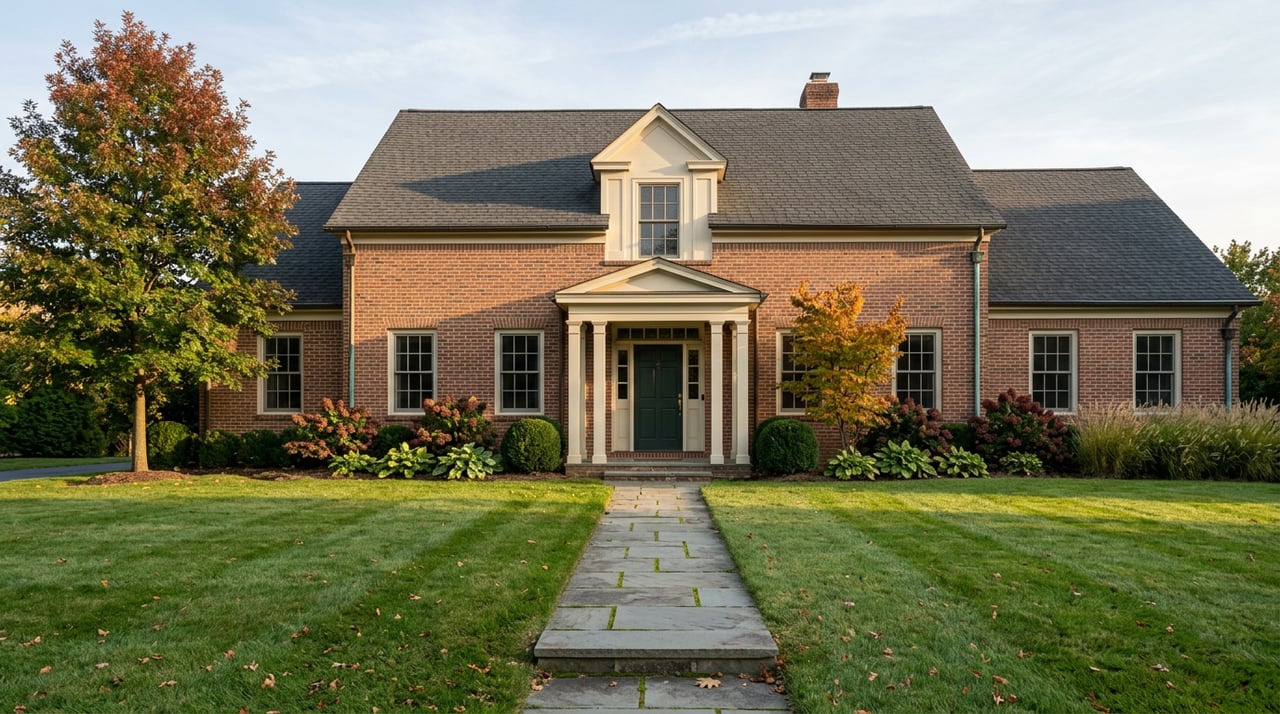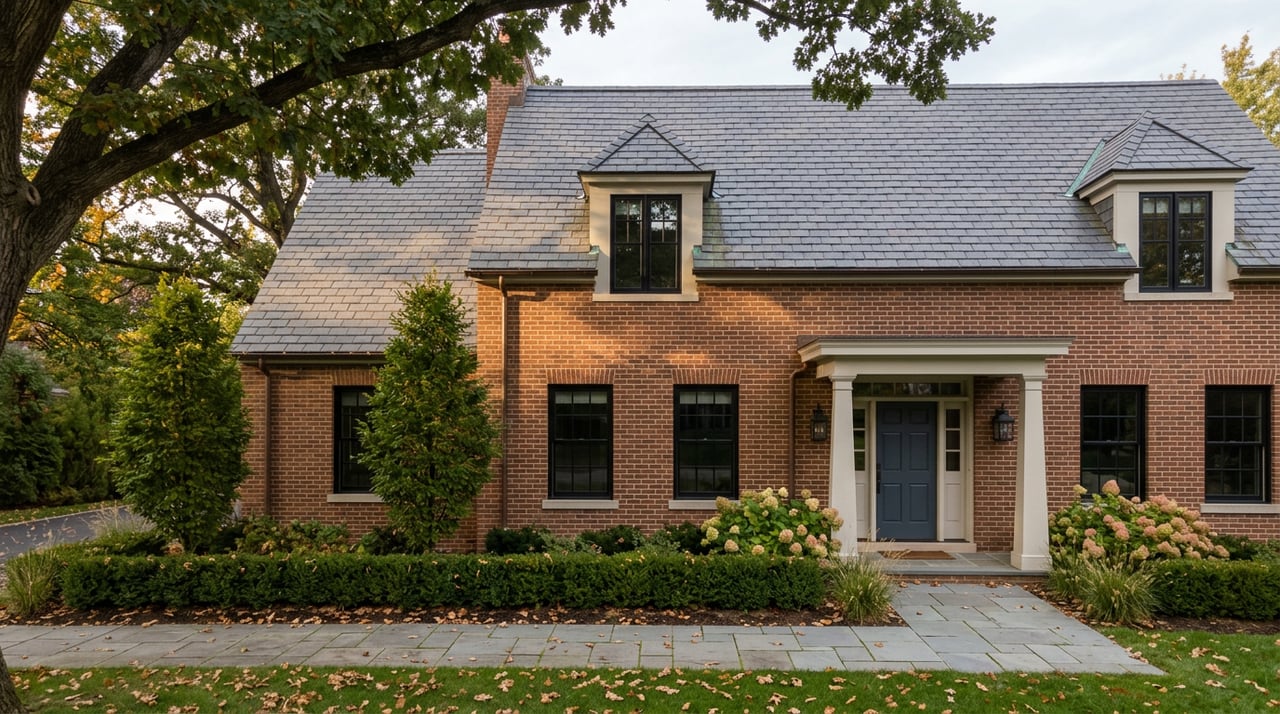
A Winnetka mansion that sold for $6 million in 2024 hit the market this August asking $14.9 million after renovation. A few blocks away, on Sheridan Road, a different owner watched a lakefront property's appraisal fall from roughly $11.12 million to $7.31 million after the village eliminated about 10,000 square feet of buildable land on the same lot. Neither number is a typo. Both are Winnetka, in 2026, on properties built the same era.
The difference isn't the house. It's which rulebook the address falls under, and whether the buyer or seller knew that before they made an offer.
Winnetka runs two separate systems for deciding what an aging home is allowed to become. One rewards you for keeping an old house standing. The other can strip millions in value from a lot regardless of what's built on it. A listing that looks like a straightforward fixer-upper can sit inside either one, sometimes both, and the difference changes the math on renovation, demolition, and resale before a single contractor gets involved.
Two Different Sets of Rules, Same Village
The first system applies village-wide and governs anything the Landmark Preservation Commission considers historic or architecturally significant. It's built to slow down demolition, not stop it, and it offers a real incentive to renovate instead of tear down.
The second system applies only to the lakefront, where the village passed new construction limits in 2024 after a controversial teardown project drew years of public pushback. That ordinance doesn't care whether the house is historic. It cares whether the lot sits on a steep slope near the bluff, and it can shrink the buildable footprint of a property enough to move the appraisal by seven figures.
Here's how the two compare on paper.
| Historic Preservation Ordinance (village-wide) | Bluff Protection Ordinance (lakefront only) | |
|---|---|---|
| What triggers it | Home flagged as historic or architecturally significant by the Landmark Preservation Commission | Lot located on a steep slope near Lake Michigan's bluff |
| What it restricts or rewards | Delays demolition up to 270 days; offers a 20% building-size bonus if the home is preserved | Limits how much of the blufftop and steep-slope area can be built on |
| Can it block a project outright | No, the Commission can only delay, not deny | No, but it can shrink buildable square footage significantly |
| Documented effect on value | Bonus square footage rewards renovation over demolition | Appraisal drops of $3.8 million and 64% cited in litigation |
| Status as of September 2026 | In effect since 2021, unchanged | Reaffirmed by federal court on September 1, 2026 |
The inland version is a carrot with a small stick attached. The lakefront version is closer to a wall, and it has been tested in court more than once this year.
What the Bluff Ordinance Has Already Cost, in Court Filings
The bluff ordinance exists because of one property. Private equity investor Justin Ishbia combined three adjoining lakefront lots on Sheridan Road, demolished the homes on them, and began building what has been described as the most expensive residential project in Illinois history. The scale of the bluff reshaping that came with it drew enough public objection that the Village Council passed new steep-slope protections in 2024, modeled on similar rules already in place in neighboring Glencoe, Kenilworth, and Highland Park.
A group of other lakefront owners sued, arguing the ordinance amounted to an unconstitutional taking of their property. The case has moved through federal court twice. It was dismissed the first time in October 2025 for lack of evidence that values had actually dropped, not just that they might. The plaintiffs came back in December 2025 with an amended complaint that put real numbers on the table. According to that filing, one Sheridan Road property owned by investor Michael Hara lost close to $4 million in appraised value after roughly 10,000 square feet of buildable blufftop became off-limits, and a Taylorsport Lane estate owned by Barbara Irwin dropped 64 percent in value after losing 17,700 square feet.
Federal Judge LaShonda Hunt dismissed the case again on September 1, 2026, this time rejecting the constitutional claims for good. The dismissal means the plaintiffs can't bring those federal claims back, though a handful of state-law arguments may still proceed separately. The village has said publicly that it hopes the litigation over the ordinance itself is finished.
For anyone evaluating a lakefront lot in Winnetka right now, the practical takeaway isn't which side won. It's that the ordinance has survived its legal challenge and the numbers cited in the litigation give a real range for how much buildable area, and value, a steep-slope lot can lose.
The Inland Version Comes With a Reward Attached
Away from the bluff, the village takes the opposite approach. An amendment adopted in 2021 gave the Landmark Preservation Commission the ability to delay demolition of a historic or architecturally significant home for up to 270 days, specifically to give the owner time to consider alternatives. The same amendment created a 20 percent maximum building size bonus for any home the Commission finds historic or significant, as long as the owner doesn't demolish it or alter it in a way that erases what made it significant in the first place.
The Commission can't stop a demolition outright. What it can do is make tearing down a flagged house slower and less certain than renovating one, while making renovation more attractive by letting the owner build larger than zoning would otherwise allow. That combination is why the $6 million to $14.9 million renovation story isn't an outlier inland. It's the system working as designed.
One House, Both Rulebooks: The Clement Stone Mansion
The clearest example of what happens when a property sits inside both systems at once is the Clement Stone Mansion at 445 Sheridan Road. Shiraz and Vijay Kotte, Vijay is the CEO of GoHealth, bought the historic lakefront home in 2023 for $12.3 million. The Landmark Preservation Commission determined the house was architecturally significant and imposed the 270-day demolition delay, urging the Kottes to consider renovating instead. A Commission member, Laura Good, resigned from the board during the dispute over how the case was handled.
The Kottes told village officials and later the Chicago Tribune that they had originally planned to renovate, but that an inspection turned up foundation issues serious enough to make renovation impractical. They also happened to be plaintiffs in the bluff ordinance lawsuit, since the property sits on a lakefront lot, though they withdrew from that litigation in December 2025, months after winning demolition approval in June. The village approved a new 28,690 square foot home for the site, with a construction budget reported at $10 million, among the largest lakefront projects in Winnetka in recent years.
The Clement Stone Mansion shows the two systems aren't always separate tracks. A lakefront home flagged as historically significant can trigger the delay and the bonus incentive from one ordinance while also facing buildable-area limits from the other. The Kottes ultimately built new because the underlying structure couldn't support renovation, not because the incentives failed to work. But the timeline, and the added scrutiny, came from both directions at once.
What to Check Before You Assume "Dated" Means "Discount"
If you're looking at an older Winnetka home, the listing price alone won't tell you which rulebook applies. Two questions are worth asking early, ideally before you write an offer.
First, has the Landmark Preservation Commission surveyed or flagged this specific address as historic or architecturally significant. If so, a full renovation may come with a 20 percent size bonus that a straight rebuild doesn't get, and a teardown plan should budget for a delay that can run most of a year.
Second, does the lot touch the lakefront steep-slope zone. If it does, the buildable footprint may be smaller than the parcel size suggests, and that difference has already shown up as millions of dollars in court filings this year. A "teardown opportunity" on the bluff isn't automatically a blank canvas.
This is exactly the kind of groundwork we do with clients before a Winnetka listing goes live, whether the plan is a renovation that leans into Compass Concierge to fund the work upfront, or a sale that's priced with the real regulatory picture already accounted for. An old house in this village can be an asset or a liability depending on facts that aren't in the MLS description.
A Few Questions We Hear
How do I find out if a specific address is flagged by the Landmark Preservation Commission? The Commission maintains an ongoing survey of the village. We can help you check a specific address against that survey before you write an offer or list a property.
Does the 20 percent size bonus apply to additions, or only full preservation? The bonus applies as long as the home isn't demolished or altered in a way that destroys the qualities that made it significant. Additions and updates that respect the original structure typically qualify.
If I'm buying a lakefront lot, does the bluff ordinance mean I can't build anything? No. The ordinance includes exceptions and variations for individual lots based on their actual slope, not a blanket restriction. It does mean the buildable area may be smaller than the lot size implies, and any project near the bluff should budget time and engineering costs for that review.
If you're weighing a renovation, a rebuild, or a sale on an older Winnetka property, Allie + Julie can help you figure out which rulebook your address falls under before you commit to a plan. Request a free home valuation and we'll walk through the specifics with you.