If you want an easier commute without giving up space, parking, or everyday convenience, Skokie deserves a close look. Many buyers assume commuter-friendly living means being steps from a train, but in Skokie, the picture is more flexible than that. You have options that fit different routines, whether you drive, take transit, work hybrid, or want a backup plan for all three. Let’s take a closer look at how Skokie’s housing options line up with the way you actually live.
Why Skokie Works for Commuters
Skokie’s commute story is not rail-only. In the 2020-2024 ACS snapshot, 58.6% of workers drove alone, 12.4% carpooled, 20.3% worked from home, and 4.3% used transit. The same data also shows that 7.0% of households had no vehicle, 40.0% had one vehicle, and 37.5% had two.
That mix matters when you are choosing where to live. It means Skokie can work well if you want access to transit but still rely on a car for part of your week. For many buyers, that balance is what makes the village practical.
Skokie is also planning for better mobility over time. The village is working with CMAP on a bicycle and pedestrian plan, and its transportation goals include increasing public transit access and commuter ridership. For buyers thinking long term, that adds another layer of appeal.
Rail Access in Skokie
Yellow Line stations
Skokie has two CTA Yellow Line stations: Dempster-Skokie at 5001 Dempster Street and Oakton-Skokie at 4800 Oakton Street. The Yellow Line, also known as the Skokie Swift, runs between Dempster-Skokie and Howard. From Howard, you can continue toward downtown Chicago using Purple Line Express or Red Line connections.
Both Skokie stations are accessible, which is helpful if ease of station access is part of your search. But the two stops serve slightly different lifestyles. That distinction can help you narrow your home search faster.
Dempster-Skokie for rail plus parking
Dempster-Skokie is a strong fit if you want rail access with a park-and-ride setup. The station offers indoor bike parking, Park & Ride, and connections to CTA #54A and #97 plus Pace #250 and #626.
If your commute includes a drive to the station, bike storage, or a route that changes day to day, this stop offers flexibility. Buyers looking near Dempster may find that commuter-friendly living here means combining train access with easy station parking and bus links.
Oakton-Skokie for walkable transit access
Oakton-Skokie functions more like a walkable downtown transit node. It offers sheltered bike parking, entrances from Oakton and Skokie Boulevard and from Searle Parkway and Skokie Boulevard, a kiss-and-ride lot, and connections to CTA #54A and #97 plus Pace #210 and #226.
The village’s land-use guidance supports this pattern. Downtown Skokie includes land-use categories such as Downtown Core Mixed-Use, Transit Oriented Mixed-Use, Transit Oriented Housing, and Multifamily Housing near transit hubs. If you picture a condo or lower-maintenance home where you can stay closer to shops, services, and the train, Oakton often fits that goal.
Bus Connections That Expand Your Options
Not every commuter-friendly home in Skokie sits right next to the Yellow Line. The bus network fills in many of those gaps and gives buyers more realistic choices across the village.
Pace Route 250 is one of the most useful examples. It runs from downtown Evanston via Dempster to the O'Hare Multi-Modal Facility, with key connections that include the CTA Purple Line Davis Street Station, the Metra UP-North Davis Street Station, and the Dempster-Skokie CTA station.
Pace describes Route 250 as the local complement to Pulse Dempster, which runs more frequently along the same corridor. For buyers near Dempster, that means the street itself can be an important commuting asset even if you are not within a short walk of a rail station.
Other routes also widen the map:
- Pace 210 serves Skokie, Morton Grove, Glenview, and Lincolnwood and connects to Oakton CTA Yellow Line plus Metra Milwaukee District North stations in Glenview, Golf, and Morton Grove.
- Pace 226 serves Skokie and runs between Jefferson Park and Mt. Prospect via Des Plaines.
- Pace 225 provides weekday rush-hour service between the Howard industrial area in Niles and Jefferson Park Transit Center and also serves Skokie.
- CTA Route 97 connects Dempster-Skokie and Howard and also serves Old Orchard Mall.
- Pace 626 provides weekday service from Dempster-Skokie Station to Lincolnshire Business Center, with destinations including Northbrook Court and the Lake Cook Road Metra station.
For you as a buyer, the takeaway is simple. A home does not need to be train-adjacent to be commuter-friendly. In Skokie, a solid bus-to-rail connection can be just as valuable.
Housing Types for Different Commutes
Skokie has enough housing variety to support several commuter lifestyles. Census QuickFacts shows a 74.7% owner-occupied housing rate and 24,382 households. CMAP data adds an important layer: 54.5% of housing units are detached single-family homes, while 27.2% are in buildings with five or more units.
That means you are not choosing between one narrow housing type and another. You can look at condos, attached homes, multifamily buildings, and detached houses depending on how much space, maintenance, and commute convenience you want.
Condos near downtown and Oakton
If your top priority is walkability and low maintenance, transit-adjacent condos and mixed-use buildings near downtown Skokie and Oakton are worth attention. The village’s planning framework specifically supports transit-oriented housing and multifamily uses near this area.
This part of Skokie may appeal to buyers who want to leave the car parked more often, stay close to the station, or simplify day-to-day upkeep. It can also be a practical fit if you work hybrid and want easy access to transit on office days.
Attached homes along commuter corridors
Townhomes, attached homes, and small multifamily buildings can offer a middle ground. They often appeal to buyers who want more space than a typical condo but still want a location tied into bus routes, station access, or major corridors.
In Skokie, that middle-ground option matters. Commuter-friendly living does not always mean being in the most transit-dense pocket. Sometimes it means getting a little more room while staying connected to Dempster, Oakton, Touhy, Lincoln, Main, or Skokie Boulevard.
Single-family homes across the village
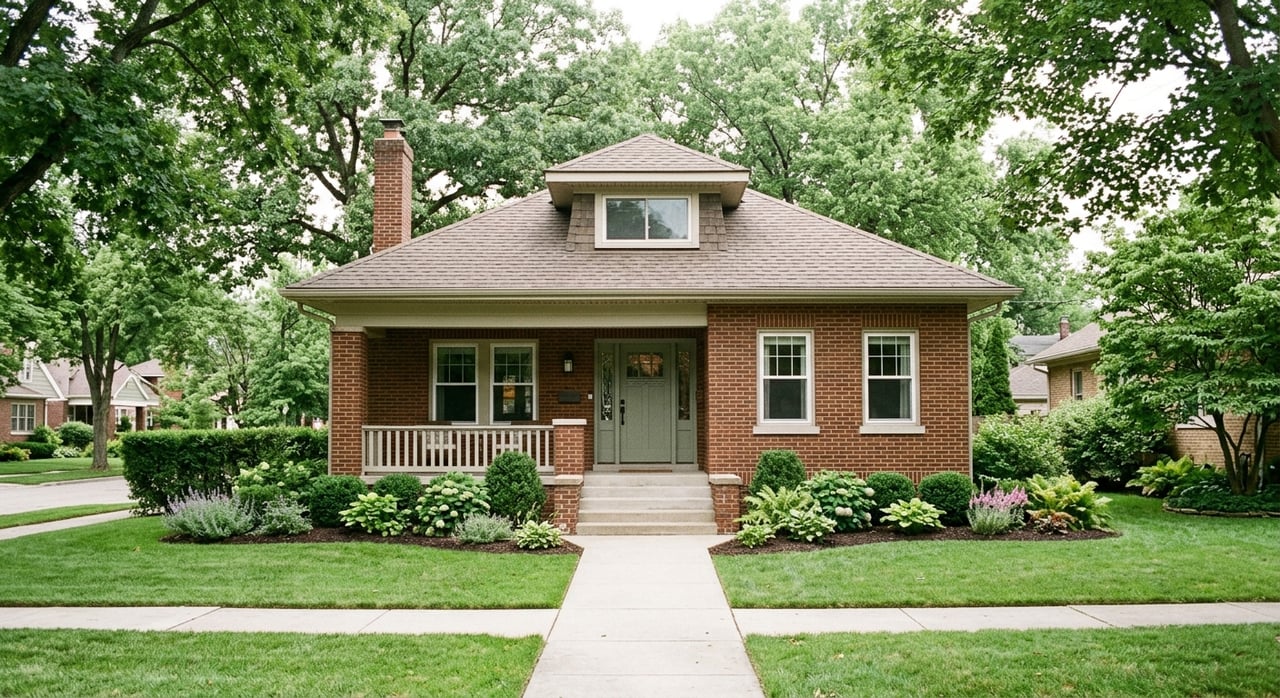
Detached single-family homes remain the largest share of the housing stock in Skokie. For many buyers, that is the best fit if you want a garage, a yard, or extra bedrooms while still staying within reach of the village’s transit web and road network.
This option often works well if your routine includes driving most days but you still want transit as a backup. It can also make sense if two household members commute in different ways and need flexibility.
What the Housing Stock Means for Buyers
Skokie’s homes are often not brand new, and that is useful to know going in. The median year built is 1959, and 64.7% of units were built between 1940 and 1969.
In practical terms, many homes may feel original, updated, or partially renovated rather than newly built. If you are shopping in Skokie, it helps to focus on layout, condition, storage, parking, and how the home supports your weekly routine.
Unit size also supports a range of needs. According to CMAP, 41.2% of units have three bedrooms, 28.5% have two bedrooms, and 14.9% have four bedrooms. That mix can work well if you need a home office, guest room, or extra flexibility for hybrid work.
Key Areas to Consider
Downtown Skokie and Oakton
This area is often the strongest match for buyers who want a more walkable setup. With Oakton-Skokie station access, bus connections, and transit-oriented land-use planning, it tends to support condo-friendly and lower-maintenance living.
If you want to be closer to a station entrance, bike parking, and mixed-use development patterns, this is a logical place to start your search.
Dempster corridor and station area
The Dempster-Skokie area can be especially useful if you want a rail commute with parking flexibility. The station’s Park & Ride, indoor bike parking, and multiple bus connections give this part of Skokie a strong rail-plus-parking profile.
This area may also make sense if your commute shifts between transit and driving depending on the day.
Old Orchard and north Skokie
For buyers in north Skokie, CTA Route 97 is an important connection because it links Dempster-Skokie and Howard and also serves Old Orchard Mall. That makes this area worth considering if you value a bus-to-rail link more than a short walk to the train.
In this part of the village, commuter-friendly often means practical connections rather than direct station adjacency.
Broader village locations near major roads
Major corridors including US 41 and arterial streets such as Dempster, Oakton, Touhy, Lincoln, and Main also shape daily convenience. Skokie is pursuing US 41 and Oakton Street improvements, and those road links matter for car-based commuting just as much as rail matters for transit users.
If you expect to drive regularly, these broader village locations can still be very commuter-friendly. The benefit is often a balance of house size, parking, and road access, with transit available as a secondary option.
How to Choose the Right Fit
When you compare homes in Skokie, it helps to define what commuter-friendly means for you. For one buyer, it may mean walking to Oakton-Skokie. For another, it may mean driving to Dempster-Skokie, catching a bus along Dempster, or having quick access to US 41.
A few questions can make your search clearer:
- Do you want to walk to rail, or are you comfortable with a bus connection?
- Will you commute the same way every day, or do you need options?
- Is lower maintenance more important than extra space?
- Do you need parking, a garage, or room for a home office?
- Would a corridor location support your routine better than a station-adjacent one?
The best answer is not the same for everyone. That is why Skokie stands out. It gives you several ways to build a workable commute around the kind of home you actually want.
If you are comparing Skokie housing options and want help weighing commute, condition, and resale potential, Allie Payne can help you sort through the tradeoffs and find the right fit for your goals.
FAQs
What makes Skokie commuter-friendly for homebuyers?
- Skokie offers a mix of commuting options, including driving, bus routes, CTA Yellow Line access, and hybrid-work-friendly housing choices.
Which Skokie area is best for transit-oriented living?
- Downtown Skokie near Oakton-Skokie is often the most transit-oriented area because of its walkable station access and transit-focused land-use planning.
Is Dempster-Skokie a good station for park-and-ride commuters?
- Yes. Dempster-Skokie offers Park & Ride, indoor bike parking, and several CTA and Pace bus connections.
Are there commuter-friendly single-family homes in Skokie?
- Yes. Detached single-family homes make up the largest share of Skokie’s housing stock, and many locations still offer access to major roads, buses, and CTA stations.
Do you need to live next to the train to commute easily from Skokie?
- No. Many Skokie buyers rely on bus-to-rail connections or road access, so a home can be commuter-friendly without being steps from a station.
What kind of homes are common in Skokie?
- Skokie has a broad mix that includes detached single-family homes, condos, and larger multifamily buildings, with much of the housing stock built in the mid-century period.